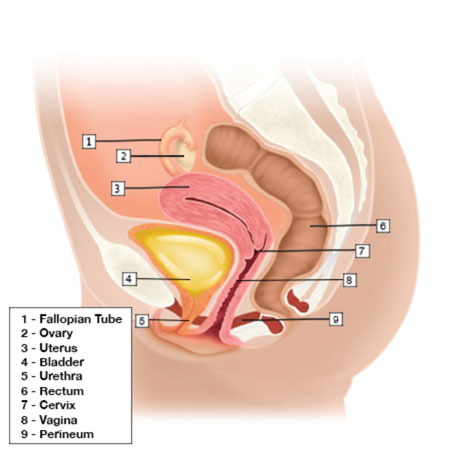
Stress urinary incontinence (SUI) is the loss of urine with coughing, sneezing, laughing, exercising or heavy lifting. The amount of SUI can range from light, occasional leakage to heavy, frequent episodes of incontinence. SUI is caused by a weakening of the muscles and connective tissues that work to support the bladder and the urethra. When these muscles and connective tissues weaken, the urethra can become mobile, allowing urine to leak during times of physical stress. Stress incontinence also occurs if the urethra itself is too weak to hold urine in the bladder. The most common causes of SUI include age, genetics and vaginal deliveries. SUI is diagnosed based on patient’s history of symptoms and physical exam.
Treatment for SUI includes pelvic floor physical therapy or mid-urethral sling (TVT). Pelvic floor physical therapy is a good option for women with new onset or mild SUI. TVT is the gold standard of treatment for stress urinary incontinence.
Testing often times includes urodynamics. During urodynamics, a tiny catheter is used to slowly fill the bladder with warm water. Pressure in the urethra and bladder is measured continuously during urodynamics. The muscle strength of the pelvic floor is also measured continuously. As the bladder fills and empties, these measurements are used to identify the cause of incontinence and aid in deciding what treatment is optimal. Urodynamics is performed before surgery to ensure normal bladder function and to determine appropriate tensioning of the mid-urethral sling.
Book An Appointment
I can't say enough about how happy I am that I made the choice to see Dr. Shashoua and his amazing team. I had a mid-urethral sling placed because after a traumatic childbirth, I could barely even have a good laugh without urinary incontinence. I am now five months post-op and I can workout, run, jump, sneeze, really do ANYTHING without any leaks at all. It's honestly been a new lease on life for me. Every single thing about this practice is very professional. The entire team made me feel completely comfortable every step of the way. Surgery was no big deal, and I only wish I had done it sooner.